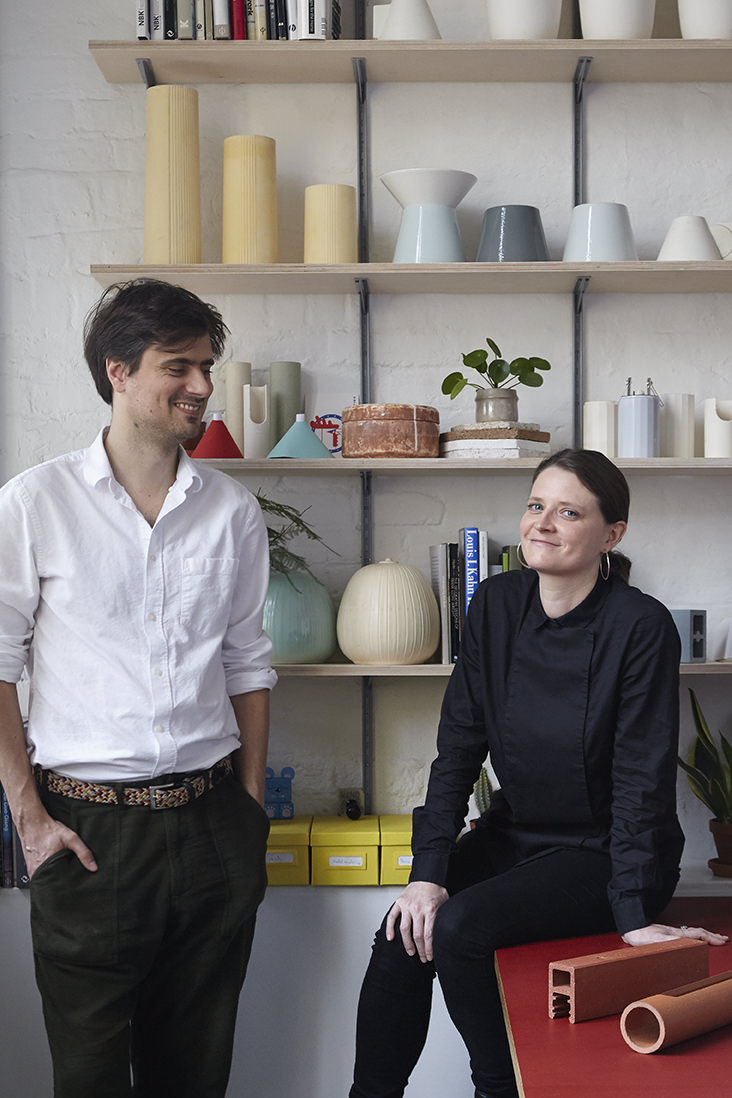
There is a quiet confidence to the work of Hand & Eye Studio — a sense that each piece has been shaped as much by instinct as by intention. Grounded in a hands-on approach to making, their lighting balances material honesty with refined simplicity, allowing glass, clay and brass to express their character.
We sat down with Thomas Housden, founder of Hand & Eye, to discuss the philosophy behind the practice, their relationship with materials, and the stories behind some of their most recognisable designs. Working from their Devon workshop, the studio continues to explore the relationship between process and form, creating lights that feel both timeless and deeply considered.
Their pieces, now on display in Another Country’s London showroom, sit naturally alongside our thoughtfully crafted furniture, each object contributing to a wider dialogue about space, atmosphere and use.
Hand & Eye Studio has a very distinctive approach to lighting design. How would you describe the philosophy behind your work, and what continues to inspire your designs?
In our formative years at design school, we spent much of our time in the workshops, discovering that learning through making — engaging directly with materials and processes — was the most playful and rewarding way to work. In an Arts and Crafts sense, we value the balance of body and mind in the design process, bringing hand and eye together, which ultimately inspired the name of our studio.
From our workshop in Devon, this approach continues to guide us. Many of our most important design decisions emerge through this level of material engagement, often in ways that wouldn’t be possible otherwise. At its core, our philosophy is to create pieces that are informed by their material, with a quiet and enduring simplicity.
Many of your pieces celebrate the natural qualities of materials such as glass, clay and brass. How do material choices influence the design process from concept to finished light?
We try to keep things simple and honest. Materials are chosen for their inherent qualities rather than used as embellishment. We’re often drawn to those that resist uniformity — materials that don’t easily conform to standards or total consistency.
It’s within these subtle variations and idiosyncrasies that we find character. Rather than refining them away, we aim to celebrate them, allowing the material to play an active role in shaping the final piece.
Lighting and furniture often work closely together to shape the atmosphere of a space. How do you think lighting enhances interiors and complements well-crafted furniture?
The objects we place within a space can have as much impact as the architecture itself. Every interior calls for a response that considers scale, natural light and the building’s material palette.
We tend to begin with the largest elements in a room, often the furniture and allow everything else to respond to that foundation. In terms of lighting, we believe a layered approach is essential. A successful scheme combines general, wall, localised and accent lighting, all working together to create a range of moods throughout the day.
It’s the interplay between these different elements and how they are balanced that ultimately defines the atmosphere of a space.
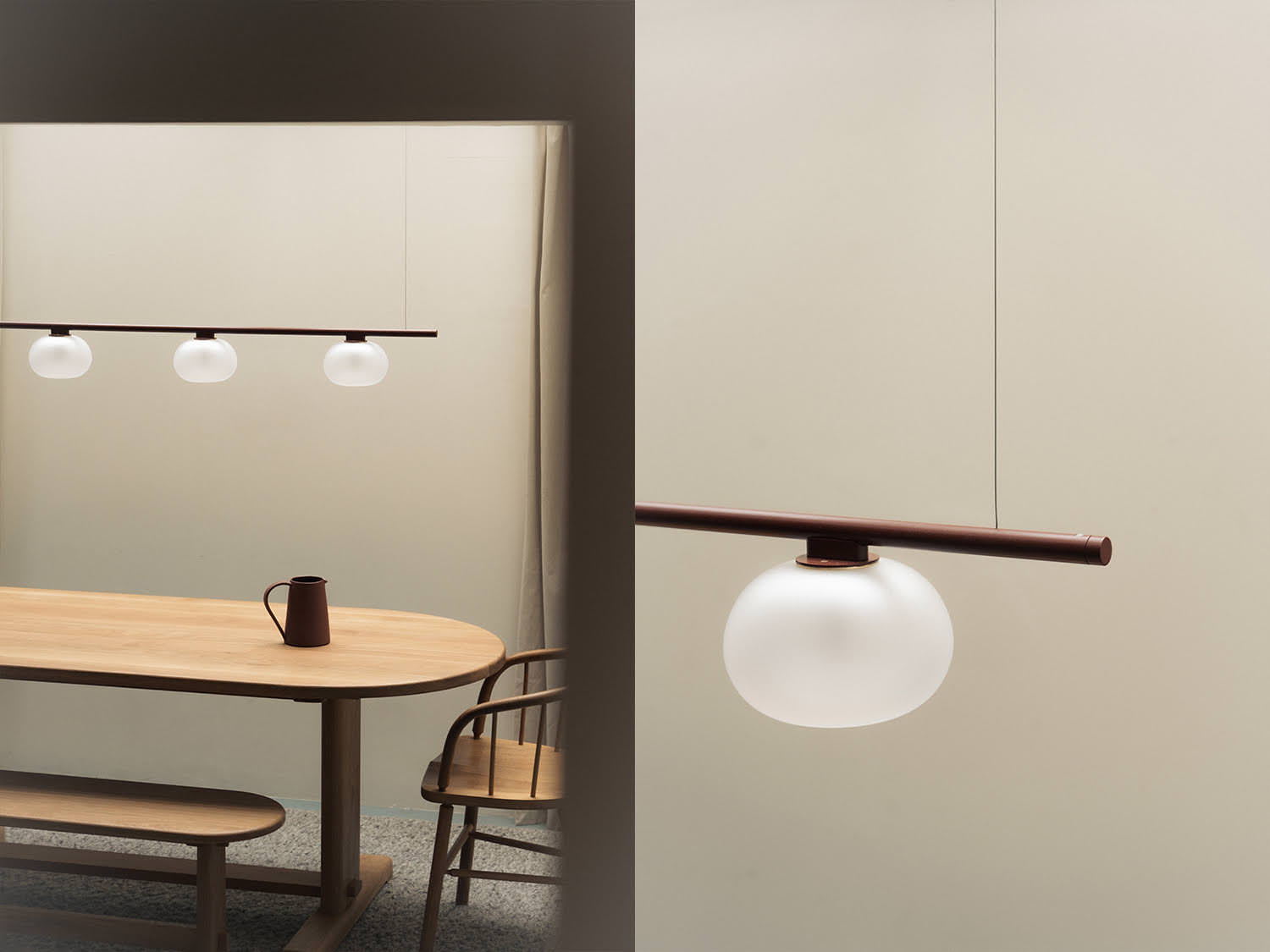
The Melina and Kamin lights each have very different characters. Could you tell us about the story behind these designs and how they evolved?
One of the great joys of our work is collaborating with like-minded makers and building lasting relationships over time.
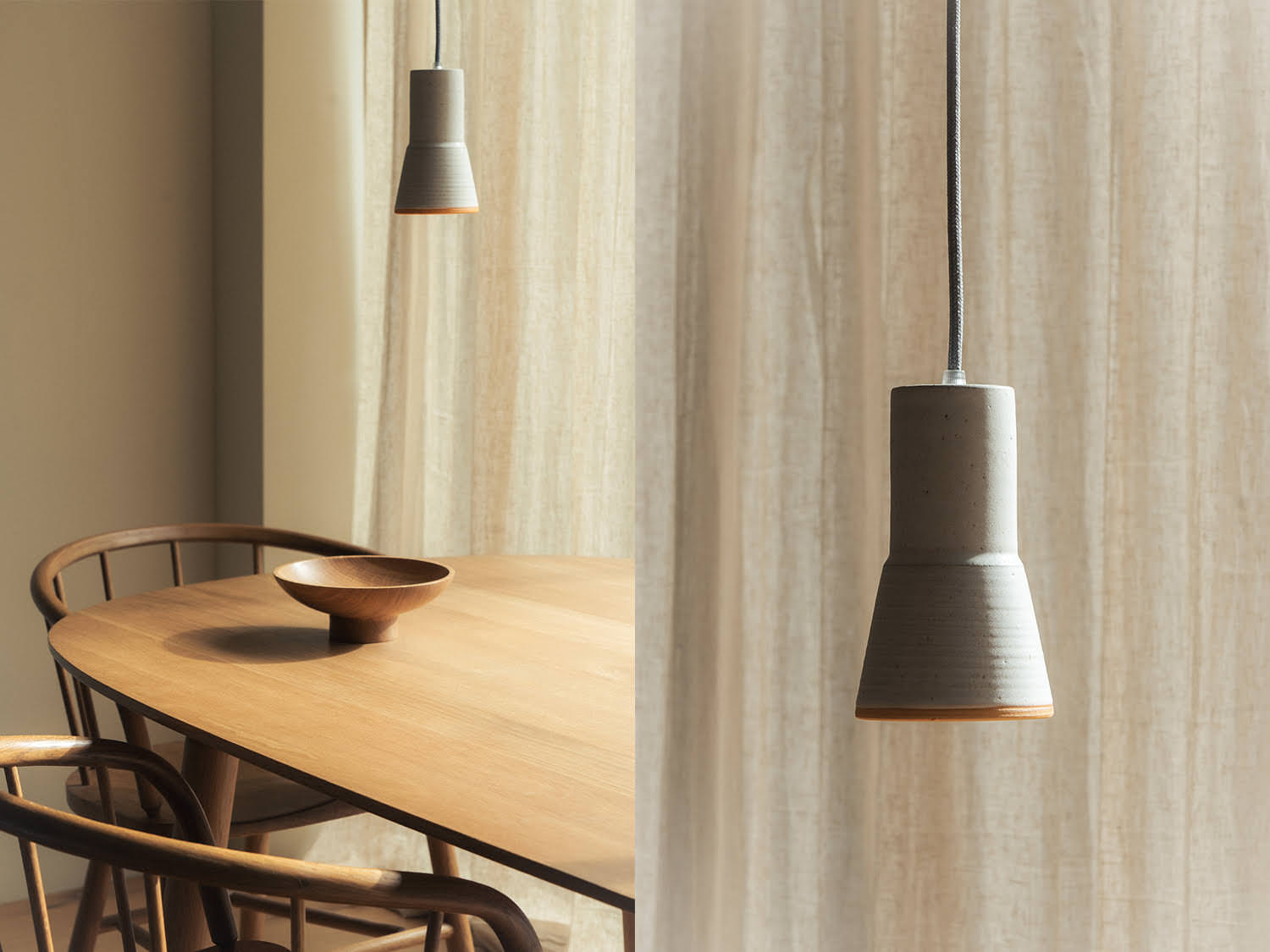
Kamin was developed in partnership with ceramicist Justin Page, who hand-turns stoneware in his South London studio. The name — German for “chimney” — reflects the origins of the form, which was initially inspired by chimney stacks. From those early shapes, we worked together to refine a design that retained its architectural clarity while functioning beautifully as a light. The result combines a clean, structured silhouette with the richness of studio pottery, finished with a subtle rim of coloured glaze that introduces a contemporary note.
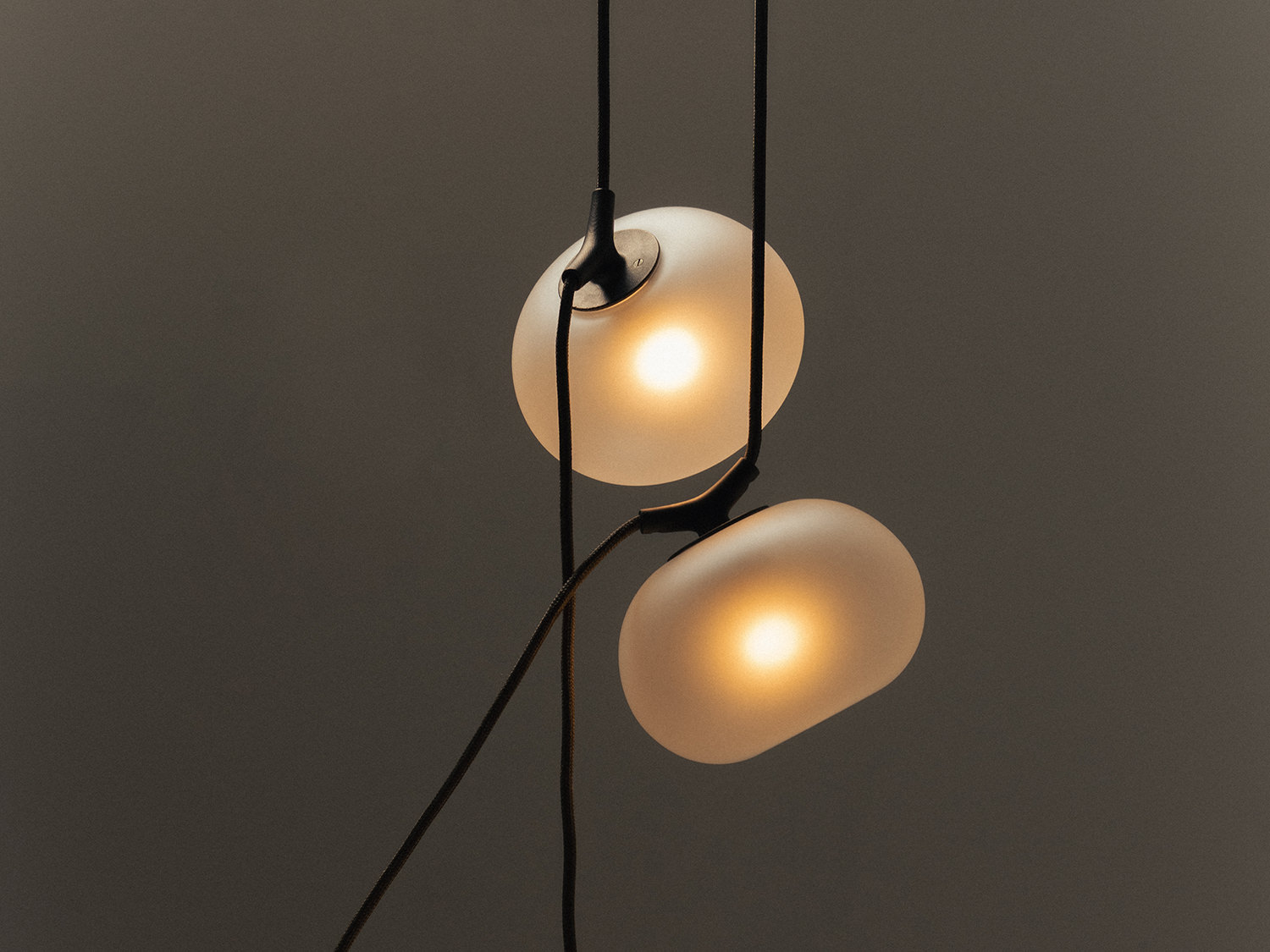
The Melina range, by contrast, is a collaboration with our friends at Mentsen. United by a shared passion for design and making, we set out to create a highly versatile lighting system. Beginning with a distinctive glass shade recognisable by its soft, dimpled form the design has evolved into a family of pieces, including pendants, wall lights, linear configurations and chandeliers. This adaptability allows the range to respond to a wide variety of spaces and uses.
While Kamin and Melina differ in material, scale and expression, both reflect our commitment to thoughtful, well-crafted design — pieces that feel equally at home in a listed interior or a contemporary setting.