


Kitchens have changed faster than any other room in the British home. Walls have come down, islands have moved in, and the old choreography of sideboard–door–dining room has given way to one fluent space where cooking, homework, emails and supper overlap. In that shift, the humble bench has done quiet, essential work. It asks less of the floor plan and gives more back in return: generous seating, easy conversation, and the kind of flexibility that serves real life rather than a photograph. Put simply, kitchen benches fit the way we live now.
A bench rearranges the social geometry of a meal: people sit closer, conversation softens, and dinners stretch without you trying.
Why benches suit the moment
Benches create a different mood from a parade of chairs. Without a picket fence of backs, sightlines stay open and everyone seems to lean in. You gain capacity in the same footprint, which matters in a narrow terrace or an urban flat. Families like benches because they’re stable and straightforward—fewer legs to trip over, fewer wobbles to mind. Between meals, the whole thing slides under the table and the room exhales. That alone can turn a busy weekday kitchen into somewhere calm to pass through on the school run.
Informality isn’t code for “anything goes”. It’s simply a choice to make the act of eating together less performative and more human. A bench helps, because it doesn’t separate people at the very moment you want them gathered.

Benches versus chairs (and the sweet spot between)
Chairs bring individual support and defined territory; benches bring ease, numbers and an unforced, communal feel. If you host often, a single bench along one side will seat more people in the same span than three or four chairs. If you favour long, lingering meals, keep upright chairs at the ends for guests who want a backrest and a sense of their own perching spot. Many homes mix the two for exactly this reason; visually it’s calmer, practically it’s kinder. The aim is balance: enough structure for comfort, enough bench to keep the atmosphere relaxed.
One bench + two upright chairs is, for many rooms, the most liveable combination.
Proportion first: comfort is a measurement
Comfort is not mysterious; it’s mostly proportion. Pair a standard 75 cm-high table with a bench seat around 43–48 cm high so knees and hips find their natural angle. As a rule of thumb, allow roughly 30 cm of seat width per person along the run; if you’re planning a tight nook, a 35–40 cm bench depth will protect circulation and still sit comfortably, provided the table legs don’t pinch shins. Keep the bench a touch shorter than the table so people can pass the corners without a sideways shuffle. These small sums—decided on paper—decide whether the room feels effortless in use.
If in doubt, test at full scale. The old newspaper trick remains the best design tool you own: lay broadsheets to the exact footprint of table and bench, sit where you would sit, walk the routes you take with a tray of tea, open the dishwasher and the fridge. If the paper crumples, shave depth; if it lies flat, you have space to breathe.
Built-in or freestanding?
Both have their place. Built-ins turn awkward alcoves into prime seating and reclaim corners that standard sets can’t touch. They feel architectural, tidy and permanent—especially good in square rooms where you want to anchor the plan. Freestanding benches are the masters of change: slide one under the table between meals, pull it to a window for reading light, or draft it into the hall when the football boots come off. If your kitchen works hard—breakfast club at seven, laptop at nine, pasta at seven-thirty—a freestanding option keeps pace without fuss. Many homes use both: a fixed L in the least-busy corner for family suppers, plus a roaming bench to flex for guests.
Materials that earn their keep
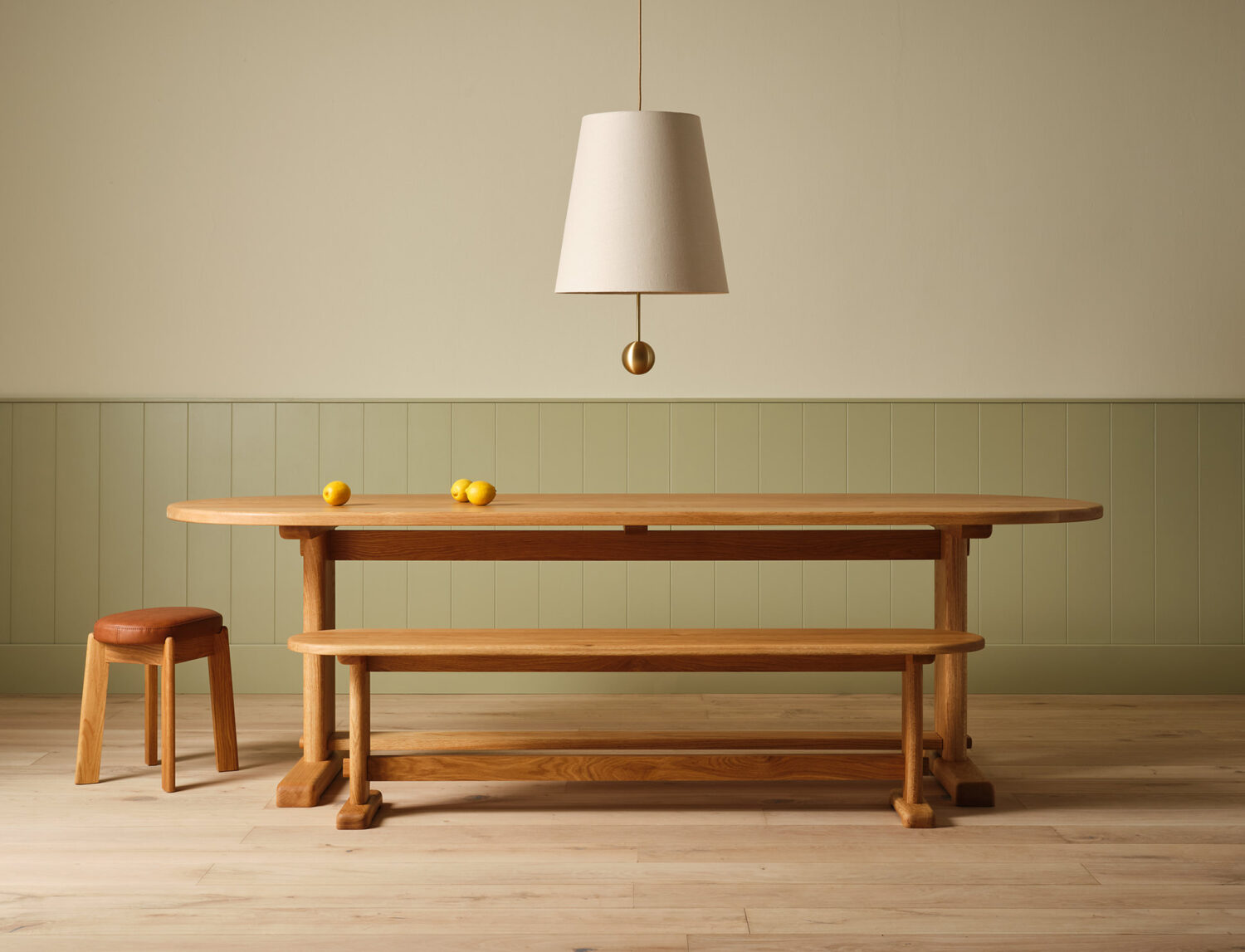
Solid wood remains the benchmark. Oak, ash and beech cope gracefully with daily life and lend a natural warmth that never dates. Left honest under plant-based oil, timber wears its years well: a light sand and a fresh coat put right most mishaps, and the surface settles into a gentle sheen that feels more welcoming with time. If you prefer a softer sit, an upholstered top or a slim cushion can transform a plain timber bench; choose durable cloth—wool blends, recycled cottons, tight linens—and removable covers you can launder.
Mixed-material benches—timber seat, steel base—introduce a crisp line without tipping into chill. The constant across styles is clean detailing and durability. You want the bench to look intentional rather than decorative: a simple profile, good joinery, a finish you can maintain.
Pick materials you can repair. The greenest bench is the one you still love in ten years.
Comfort, considered
Comfort is a combination of posture, padding and place. On timber benches, a slim pad makes a long supper feel effortless. Go for a non-slip backing or discreet ties so the cushion stays put and doesn’t skate when someone slides in. If you know meals often run long, consider a bench with a supportive back; for older guests, a back changes the experience entirely. Backless benches are lighter and more mobile, and they keep the profile clear; if you miss support, two steady cushions usually strike the balance. Rounded edges and a confident stance reduce the chance of bumps and wobbles—kind choices when there are children about.
Three measured layouts (with real-world clearances)
The 180 table plan. For a 180 cm table, aim for a 140–160 cm bench so you can pass at the corners without a sidestep. Keep the bench at 43–48 cm high to pair with a 75 cm table; allow about 30 cm per diner along the run. In a narrow room, cap bench depth at 35–40 cm to protect circulation; you’ll appreciate that spare 5 cm every day.
The bay-window nook. In a square or slightly pinched room, an L-bench can reclaim a dead corner and turn it into the most sociable square metre in the house. Keep the back just below the sill so daylight clears the tabletop. If you add an upholstered back, remember it steals a few centimetres behind; position the table accordingly so plates don’t crowd the edge.
The island echo. In open plan, align a bench and table with the island so chat can flow between prep and plate. Repeat one material—say, oak—to knit zones without visual noise; the bench becomes a light “boundary” that doesn’t block sightlines or interactions.
Making more of small spaces
Benches excel where rooms pinch and corners gather dust. Along a wall, a straight run frees the centre of the room. In an L-shaped nook, a corner bench outperforms a standard table-and-chairs set-up, because you’re not losing a leg and a back at every place. If space is truly tight, look for a design that slides fully under the table; clear the floor between meals, pull everything out when the guest list grows. In small kitchens, tiny touches—ease the corners, choose a leg set that doesn’t foul knees, stick to lighter timber tones—compound into a room that feels generous.
Storage that behaves
Calm rooms often hide their energy well. Benches with drawers or lift-up lids swallow placemats, candles, board games and school kit, keeping surfaces clear and tempers even. If you’re adding storage to a built-in, keep fronts flush and handles simple so the bench reads as a single element rather than a bank of cupboards. Sanity-check clearances for radiators, skirting and table legs; it’s easy to forget how close a drawer will sit to a table stretcher once everything is in place.
Storage under the seat is the difference between tidy-by-virtue and tidy-by-exhaustion.
Hosting without the headache
The bench is the great enabler of “pull up a plate”. When numbers swell, it takes the load: you get two or three extra places without redesigning the room. Add a couple of stools and you’ve built a convivial setting that still reads as considered. In kitchens where the island is the social centre, aligning a bench and table encourages conversation to move naturally between prep and plate—connected without being crowded. At this point the bench isn’t just seating; it’s the lightest way to zone a space so different activities can happen at once.

Sound, light and the mood of the room
Benches change acoustics as well as seating. Upholstered seats, a slim cushion and a throw can absorb the ping of cutlery and the clatter of plates—useful in hard-floored kitchens. Lighting matters, too. A single pendant centred over the table keeps sightlines open and marks the dining zone without walls. Keep glare low; warm, even pools of light invite people to linger. If you’re building a window seat, set the bench just below the sill so daylight can wash the tabletop; in the evening, soft side light and a shaded pendant preserve the relaxed tone benches naturally set.
Access and delivery (the dull bit that saves the day)
The most elegant layout means little if the piece can’t reach the room. Measure doorways, stair turns and banister clearances before you order. A bench that’s a few centimetres shorter than the table makes life easier at the corners and during delivery. If storage is built in, check lid swing and drawer travel once the bench is placed. Look for bolt-on legs on long benches—better for access now and repair later. Getting this right at the outset spares you compromises afterwards.
Safety and accessibility, quietly handled
Stability is non-negotiable. Choose a confident footprint and non-slip feet on hard floors. Standard dining heights keep sitting and standing natural. Leave a hand’s width at each end of the bench for stepping in; it’s a small detail that reads as dignity when the room is busy. If older guests dine often, a supportive back on at least one side offers rest without making the room feel formal. Soft corners are a kindness at shin height; resilient finishes are a kindness to your patience.
Style that speaks softly
Benches are accommodating by nature, which makes them unusually easy to place. A plain timber seat sits happily in a pared-back interior; a painted or lightly distressed finish brings charm to a country-leaning scheme. Mixing materials adds texture—wood and metal, fabric against smooth joinery—while a neutral palette keeps the room calm. Bolder tones can work, too, provided the silhouette stays crisp. If you’re pairing with chairs, aim for a family resemblance across lines and materials; a sleek, modern bench against chunky rustic chairs will jar. The best benches look as if they’ve always been there.
Let the bench feel inevitable, not “added on”.
The honest downsides (and how to plan around them)
Benches don’t offer the individually adjustable support some diners prefer, and sliding into the middle can be awkward if the bench sits tight to a wall. Cushions add care, and flimsy builds wobble sooner. The remedies are straightforward: mix a bench with two upright chairs, leave a little slack at the ends for graceful access, choose removable pads with non-slip backing, and invest in solid construction so maintenance is a habit, not a rescue. Know the limits and design around them once; they won’t bother you again.
Sustainability without slogans
Benches concentrate value where it matters: honest materials, spare geometry and the ability to work across rooms. Choose certified timber and finishes you can renew; prefer hardware you can tighten over hidden fixings you can’t reach. If there’s upholstery, ensure covers can come off and fabrics can be replaced. Furniture that lasts is the most responsible kind; furniture that can be repaired is better still. A bench that does twenty years at the table and then finds a second life under a window is not just good design—it’s good citizenship.
Buying checklist (the lean version)
-
Measure access: doors, stairs, turns—the delivery route matters as much as the room.
-
Seat height: ~43–48 cm for a 75 cm table.
-
Depth: 35–40 cm in tight rooms; up to ~42–45 cm if you linger.
-
Length: a touch shorter than the table for corner passing.
-
Seat allowance: ~30 cm per person along the run.
-
Structure: solid wood or a properly braced frame; no wobble.
-
Finish: durable, repairable surfaces; low-VOC oils; washable covers if upholstered.
-
Storage (optional): confirm lid swing/drawer travel in situ.
-
Mix: one bench + two chairs is often the sweet spot.

Care in five minutes a week
Wipe timber with a barely damp cloth and dry straight away. Shake pads and throws; if the bench is upholstered, run a soft-bristle vacuum head along seams and under the back. Once a year, re-oil exposed wood for resilience and warmth—a half-hour job that keeps the surface honest. For painted finishes, keep a tester pot to touch up life’s inevitable knocks. Good care isn’t fussy; it’s simply the habit of attention.
Three room recipes (you can copy)
1) The galley calm-down
Run a slim bench along the long wall, table centred opposite. Choose a 35–40 cm depth to keep circulation easy; store linens below to free the lone drawer by the oven. A single pendant softens the corridor feel and turns supper into a pause-point rather than a pass-through. Two light chairs opposite rebalance posture for longer meals.
2) The corner social
In a square kitchen, let an L-shaped bench claim the least-busy corner. It anchors the room, seats a crowd and leaves the centre open for movement. Keep the bench slightly shorter than the table on each side for easy entry/exit. Add two upright chairs opposite so the table works for homework, emails and a long Sunday roast.
3) The island echo
In open-plan spaces, align bench and table with the island so prep, serving and conversation run in a neat line. Repeat one material to knit the zones; tuck the bench away between meals so the floor reads as one field. On busy nights, pull the bench out, add two stools, and you’ve built a convivial table in thirty seconds.
The last nudge
When a kitchen bench is well judged, the whole room relaxes. You sit closer, you stay longer, and the space tidies itself with a single push under the table. The look is calm, the use is generous, and the message is simple: this is a home designed for the way people actually live. That’s the real rise of informal dining—not a trend, but a return to furniture that serves relationships first.

